
THE NATIONAL PALACE OF SINTRA – THE MEDIEVAL HEART OF PORTUGUESE ROYAL POWER
The National Palace of Sintra – The Medieval Heart of Portuguese Royal Power
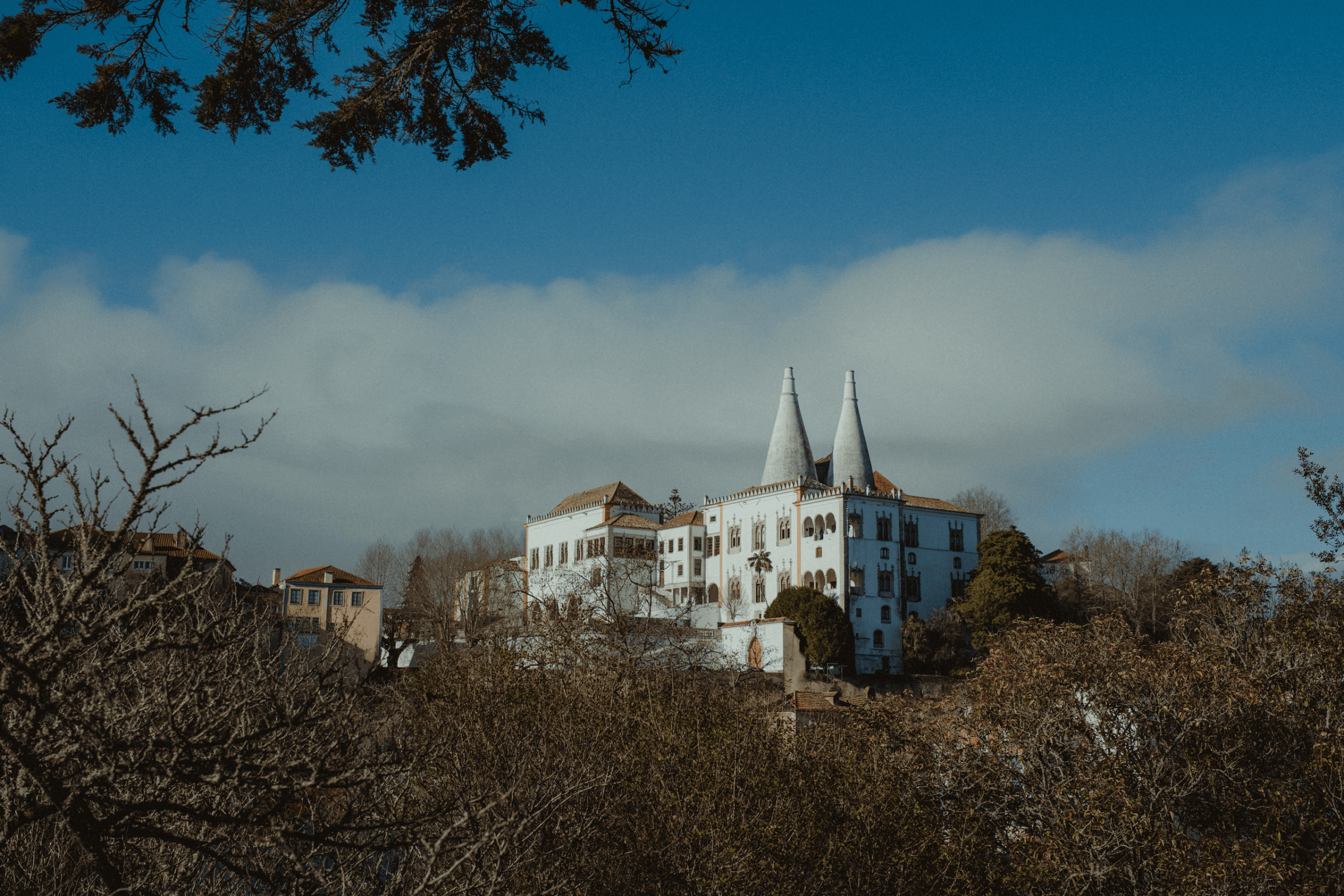
The National Palace of Sintra is the oldest surviving royal residence in Portugal and one of Europe’s most distinctive medieval palaces. Rising from the historic town centre, it reflects eight centuries of architecture, politics, and royal life, combining Moorish heritage, Gothic refinement, and Manueline splendour within a single complex.
How did the National Palace of Sintra originate?
The palace stands on the site of a former Moorish al-qasr from the 10th century. After the Christian reconquest in the 12th century, it became an official royal residence, evolving continuously as monarchs extended and embellished its rooms, courtyards, and gardens.
Who were the key royal patrons?
The palace owes its form to two major phases of royal intervention: • King João I (1385–1433) – responsible for its Gothic expansion, including the Great Hall and the Swan Room. • King Manuel I (1495–1521) – added Manueline decorative elements, maritime symbolism, and intricate portals showcasing Portugal’s Age of Discovery.
What historical events took place here?
The palace has hosted: • Royal weddings and baptisms • Diplomatic receptions • Seasonal royal court sessions For centuries it functioned as the summer residence of the Portuguese monarchy. The massive twin chimneys rising above the kitchens became symbols of domestic power and Sintra itself.
What defines the architectural identity of the palace?
How does its structure combine different styles?
The palace is an architectural palimpsest combining: • Moorish patios and horseshoe arches • Gothic halls and ribbed vaults • Manueline portals and maritime motifs White façades hide richly detailed interiors where Islamic geometric influence blends with Christian iconography.
What materials and techniques were used?
Stone, painted wood, lime plaster, azulejo panels, and terracotta tiles form the core of the building. Courtyards regulate airflow and light, a direct inheritance from Islamic architectural logic adapted to Sintra’s humid climate.
What makes the Twin Chimneys unique?
Standing 33 metres high, the conical chimneys belong to one of Europe’s largest medieval palace kitchens. Their shape: • Optimises smoke circulation • Stabilises temperature • Prevents roof damage in rainy seasons They remain one of Sintra’s most recognisable landmarks.
How does the palace integrate with the Sintra landscape?
Set at the base of the Serra de Sintra, the palace acts as a gateway between the old town and the forested slopes leading to the Moorish Castle and Pena Palace. Its terraces overlook the valley, blending architecture with the natural contours of the landscape.
What artistic and decorative elements stand out inside?
How are azulejos used as royal storytelling?
The palace contains some of Portugal’s oldest azulejo collections, many from the 15th–16th centuries. Their themes include: • Hunting scenes • Moral allegories • Mudejar geometric patterns • Maritime references These panels transformed walls into visual chronicles of royal identity.
Which function rooms define the palace’s personality?
• Sala dos Cisnes (Hall of Swans) – 27 swans painted on the ceiling, associated with Princess Isabella of Portugal. • Sala das Pegas (Magpie Room) – magpies holding ribbons reading “Por Bem,” referring to a court rumour involving King João I. • Sala dos Brasões (Coats of Arms Hall) – 72 heraldic shields representing the leading noble families of the kingdom.
What other rooms illustrate daily royal life?
• Royal Chambers and bedchambers • Chapel of São Miguel with late-Gothic detail • Medieval kitchens with enormous hearths • Underground cisterns connected to Sintra’s natural springs These spaces emphasise contrasts between ceremony, devotion, and domesticity.
How has the palace evolved over time?
What were the main restoration phases?
Restoration has included: • 19th-century structural reinforcements • 20th-century tile conservation • Roof stabilisation • Fresco and stucco cleaning • Archaeological surveys revealing earlier phases These efforts balance authenticity with long-term preservation.
Who manages the site today?
Parques de Sintra – Monte da Lua oversees conservation, research, and public access, maintaining the palace as part of the UNESCO-listed Cultural Landscape of Sintra.
How has its function changed?
From royal residence to heritage museum, the palace now introduces visitors to Portugal’s decorative arts, architecture, and political history. It serves as a key node linking Queluz, Mafra, Pena, and Sintra’s medieval heritage.
Why is the National Palace of Sintra culturally significant?
How does it represent Portuguese identity?
The palace embodies Portugal’s cultural synthesis: • Islamic influence meeting Gothic Christian forms • Manueline motifs celebrating maritime expansion • Symbolic animals and heraldry expressing royal ideology
What symbolic meanings exist within the palace?
Swans represent purity, magpies represent discretion, and heraldic shields reflect lineage and loyalty. Geometry, colour, and spatial hierarchy all function as tools of political messaging.
How is the palace connected to other royal sites?
The palace forms a chronological sequence with: • The medieval São Jorge Castle in Lisbon • The Renaissance Manueline complexes in Belém • The Rococo palace of Queluz • The colossal Baroque palace of Mafra
What international relevance does it hold?
It is one of Europe’s best-preserved royal palaces continuously inhabited until the 19th century and a reference point for medieval courtly architecture.
Visiting the National Palace of Sintra
What can visitors expect inside?
Visitors can expect: • Grand ceremonial halls • Tiled rooms and intimate royal quarters • Panoramic courtyards • Interpretative exhibits on Portuguese monarchy and craftsmanship
How can visitors reach the palace?
The palace is located in Sintra’s historic centre, accessible by: • Direct train from Lisbon (Rossio → Sintra) • Local buses and pedestrian routes from the station • Walking trails connecting to Pena and the Moorish Castle
What facilities and tours are available?
Facilities include: • Ticket office • Café • Courtyard seating areas • Gift shop with artisanal tiles and books Private operators often include the palace in curated Sintra itineraries.
What is the best visiting time?
Morning hours offer softer light and fewer crowds. Spring and autumn bring comfortable weather and clear views over the valley.
How do the palace’s attributes combine to make it unique?
• Architectural hybridity blending Moorish, Gothic, and Manueline forms • Symbolic storytelling through rooms, animals, and heraldry • Continuity of royal occupation for nearly 800 years • Visual dominance through its iconic Twin Chimneys • Integration within Sintra’s UNESCO Cultural Landscape
FAQs about the National Palace of Sintra
Is the palace part of UNESCO World Heritage?
Yes. It forms part of the Cultural Landscape of Sintra, designated in 1995.
How long does a visit take?
Around 60 to 90 minutes inside, with additional time recommended for nearby monuments.
Can photography be taken inside?
Photography without flash is permitted. Professional equipment requires prior approval.
What other attractions are nearby?
Close monuments include the Moorish Castle, Pena Palace, Quinta da Regaleira, Monserrate, and the Sintra-Cascais Natural Park.