
THE BIESTER PALACE – SINTRA’S HIDDEN ROMANTIC GEM
The Biester Palace – Sintra’s Hidden Romantic Gem
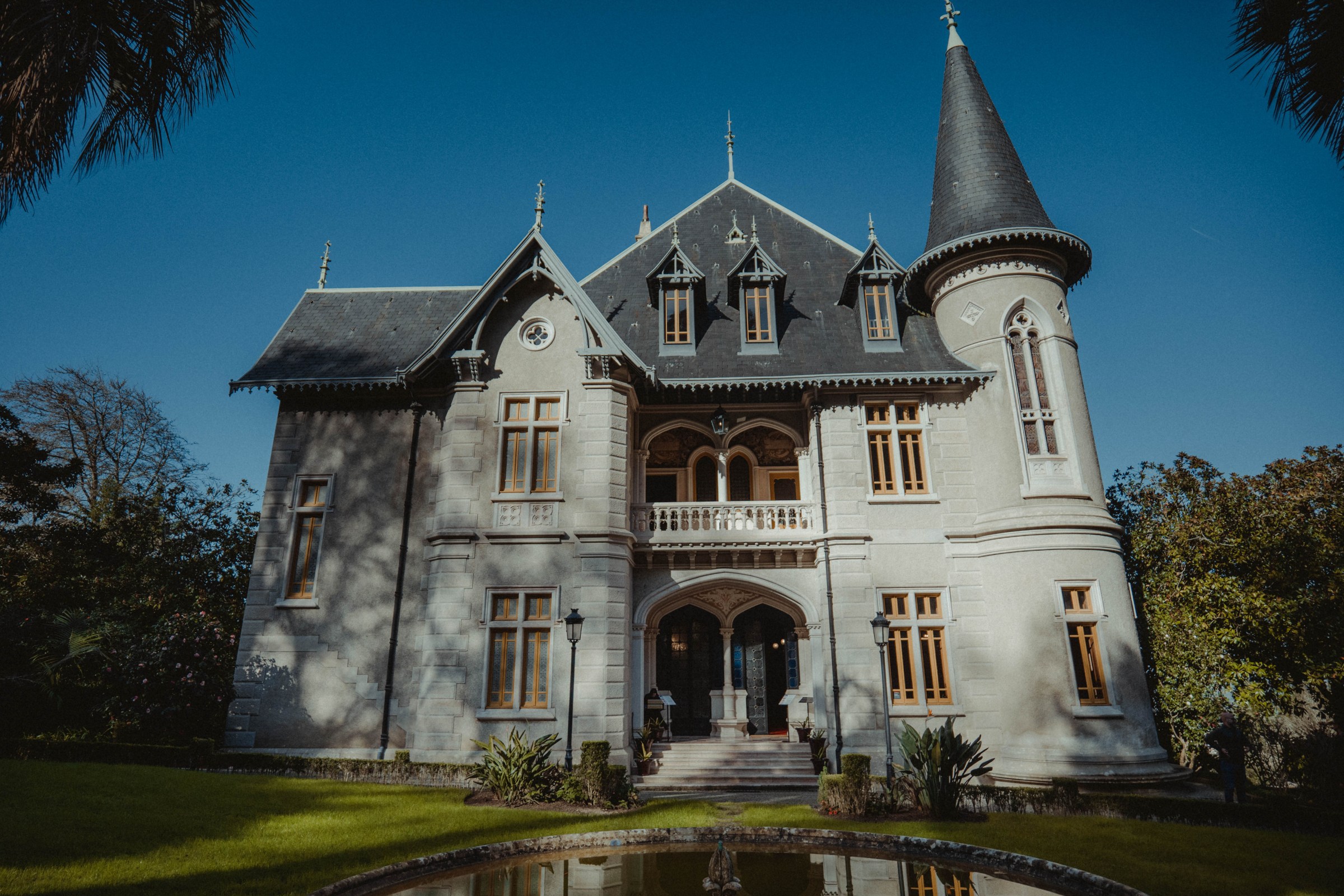
The Biester Palace is one of Sintra’s most elegant yet least known treasures. Hidden among dense gardens overlooking the historic center, it captures the spirit of late 19th-century Romanticism. Not a royal palace but a private mansion, it remained closed for more than a century, preserving a remarkably authentic interior. Its reopening in 2022 revealed a world of art, symbolism, and landscape design that had long remained private.
Where is the Biester Palace and why is it special?
The palace stands on the hillside of Sintra’s old town, a short walk from Quinta da Regaleira. It feels secluded and introspective, surrounded by lush vegetation that grows naturally in the humid Sintra microclimate. Because it stayed in private ownership for generations, its rooms retain the atmosphere of a lived-in home rather than a formal palace. The estate lies within the Sintra-Cascais Natural Park, merging architecture and forest into a unified Romantic landscape.
Who built the Biester Palace and when?
The architect behind the design
The palace was commissioned between 1880 and 1890 by Ernesto Biester, a publisher and philanthropist who envisioned a refined retreat for his family.
José Luiz Monteiro, one of Portugal’s most prominent architects, led the project. Known for the Rossio Train Station in Lisbon, he drew on Neo-Gothic and Romantic motifs to create a residence that feels both elegant and intimate.
The artists who decorated the interiors
The interior decoration was executed by Luigi Manini, the Italian scenographer behind Quinta da Regaleira and the Palace Hotel of Buçaco. His frescoes, painted ceilings, and symbolic motifs give the house a theatrical, dreamlike quality.
What architectural and artistic features define the palace?
The visual language of Romantic Sintra
Biester represents a refined example of Portuguese eclecticism. From its pointed arches to its symbolic interior décor, the palace combines Romantic sensibility with exquisite craftsmanship.
Wooden balconies, stone façades, and wrought-iron details give the exterior a mixture of lightness and verticality. Inside, colored glass filters the sunlight into shifting tones, a defining element of Romantic architecture.
Symbolic interiors and hidden meanings
Every room carries its own narrative. The Hall of Mirrors plays with reflection and perception. The intimate Chapel mixes sacred motifs with natural forms. The Library highlights carved ceilings, rare furniture, and decorative elements that reflect the intellectual spirit of the 19th century.
What makes the gardens remarkable?
Paths of symbolism and reflection
The gardens, designed by landscape architect Francisco Vilaça, unfold across terraces and winding paths, offering moments of contemplation shaped by vegetation, stone, and water.
Trails lead through shaded corners, grottoes, and viewpoints that echo Romantic ideals of introspection and inner journey.
The botanical diversity
Native oaks and laurels coexist with camellias, magnolias, camphor trees, and exotic imports. Water features add humidity and sound, giving the garden an atmospheric sense of calm.
Restoration and reopening of the Biester Palace
A new chapter as a cultural landmark
After decades of very limited access, the palace underwent a meticulous restoration from 2019 to 2021. Craftspeople preserved frescoes, ceilings, tiles, and original furnishings while introducing only minimal modern adjustments.
In 2022, the palace opened to the public for the first time. Guided tours now reveal both the interiors and gardens, and cultural events bring new life into the estate, integrating it into Sintra’s broader Romantic heritage.
The Biester Palace in film and literature
Sintra as an artistic backdrop
Biester gained international attention after appearing in Roman Polanski’s The Ninth Gate (1999), where its atmospheric rooms served as a backdrop for the film’s esoteric themes.
Alongside Regaleira, Pena, and Monserrate, Biester contributes to Sintra’s reputation as a European capital of Romantic imagination, admired by writers such as Lord Byron and Eça de Queirós.
Visiting the Biester Palace
Access and visitor details
The palace is within walking distance of Sintra’s historic center and can easily be reached by taxi or local transportation.
The monument opens most days of the year. Guided tours last around one hour and are available in several languages. Tickets may be purchased online or at the entrance.
Best visiting times
Spring and early autumn offer the most pleasant light and temperature for exploring the palace and gardens.