
COLARES WINE REGION – PORTUGAL’S ATLANTIC WINES OF HERITAGE AND RARITY
Colares Wine Region – Portugal’s Atlantic Wines of Heritage and Rarity
Between the wild Atlantic winds and the misty hills of Sintra lies one of Europe’s most secret wine regions — Colares. These are not ordinary vineyards: they are rooted in sand, shaped by salt air, and protected by centuries of patience. Every glass of Colares wine carries the rhythm of the ocean and the endurance of a people who refused to abandon tradition.
Where is the Colares Wine Region located?
Colares sits on Portugal’s western edge, within the municipality of Sintra, about half an hour from Lisbon. The vineyards stretch along a narrow coastal band between Azenhas do Mar and Praia das Maçãs, where the dunes meet the Atlantic breeze.
What makes this location so unique?
Nowhere else in Portugal do vines grow directly in the sand. Farmers dig through the dunes until they reach a layer of clay beneath, anchoring the vines where the roots find moisture and stability. The ocean’s proximity tempers the heat, creating a cool, humid climate that keeps acidity high and ripening slow.
How extensive is the vineyard area today?
Once covering hundreds of hectares, only around twenty remain — an irreplaceable patchwork of family plots protected from urban expansion by strict zoning and heritage laws.
A legacy rooted in centuries
How far back does winemaking in Colares go?
Records show vines thriving here as early as the 13th century. By the time of Portugal’s maritime expansion, Colares wines were already prized for their structure and ability to travel well on long sea voyages.
How did Colares survive the phylloxera crisis?
When the phylloxera pest devastated Europe’s vineyards in the 19th century, the sandy soils of Colares became its natural defense. The insect could not survive here. As a result, the vines of Colares remain among the few in the world still growing on their original, ungrafted roots — some over a century old.
Why does Colares represent heritage rather than just wine?
Because it preserves a way of life. Growers plant by hand, shield the vines with cane fences against the Atlantic gusts, and tend them crawling across the sand, as their grandparents did. The result is not merely a beverage but a continuation of memory.
The grapes that define Colares
What varieties shape its identity?
Two native grapes define this Atlantic terroir. Ramisco, a red grape exclusive to the region, yields wines of tension and depth — high in acidity, tannic, and built for decades of aging. Malvasia de Colares, the signature white variety, produces aromatic wines with saline freshness and a whisper of sea breeze.
How do these wines taste and evolve?
Ramisco reds begin firm and earthy, gradually softening over the years into layers of spice, leather, and dried fruit. Malvasia whites are luminous and mineral, blending citrus with the faint brininess of the nearby ocean.
How long can they age?
Some Ramisco wines from the mid-20th century remain vibrant today. It is not uncommon for a bottle to age gracefully for fifty years — a testament to the region’s natural acidity and craftsmanship.
How are Colares wines made?
What makes the viticulture so distinctive?
Each vine is planted deep within the dunes, reaching the clay below. This unusual method shelters the roots from salt exposure and keeps the temperature stable. The low, ground-hugging vines are pruned by hand, often harvested late in September.
How do winemakers preserve authenticity?
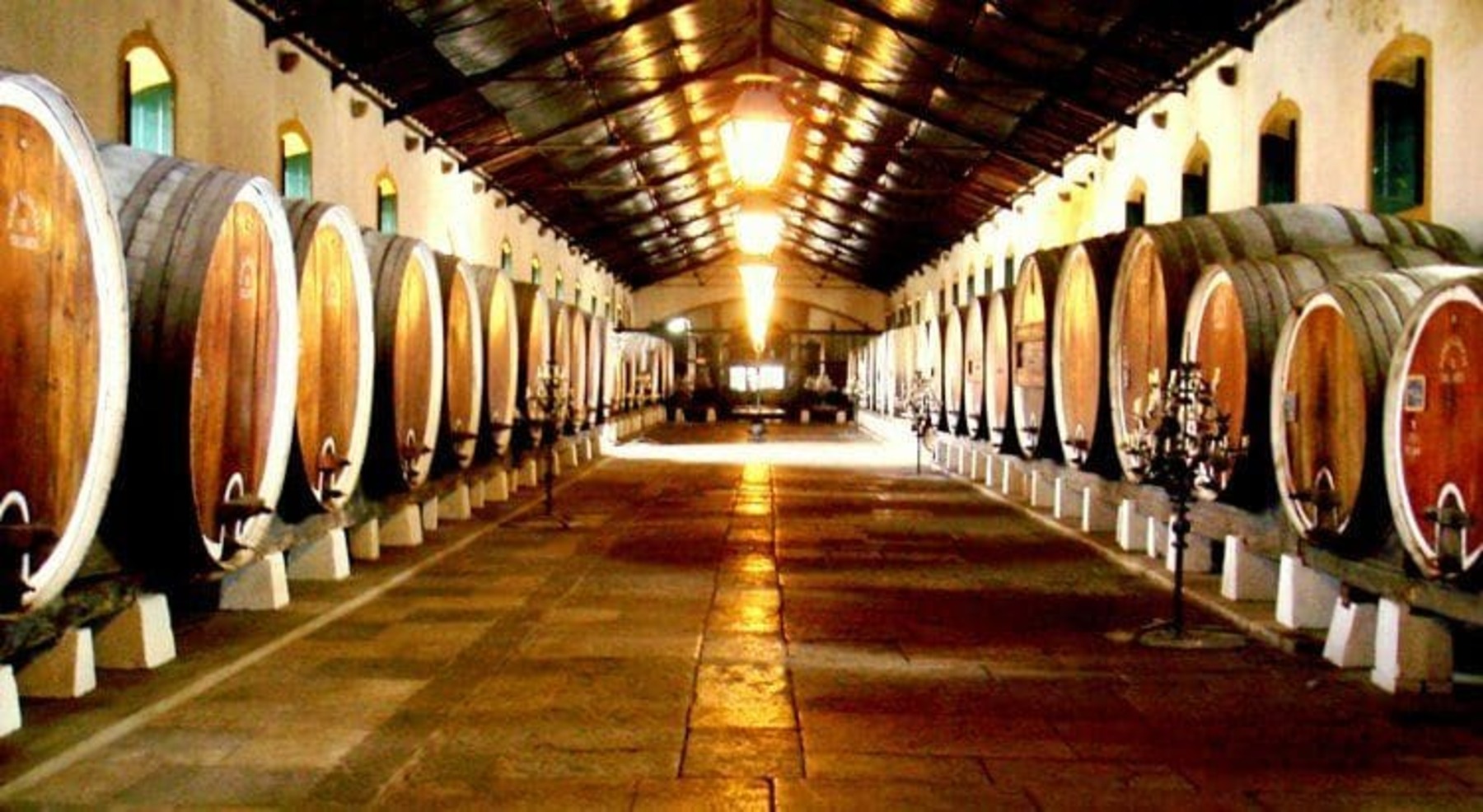
Most still ferment in wooden vats, using minimal intervention and allowing slow oxidation in old oak barrels. These techniques, once standard across Portugal, now survive almost exclusively here.
Who are the guardians of this tradition?
The Adega Regional de Colares, founded in 1931, continues to bottle wines under the original DOC label. Alongside it, smaller estates like Viúva Gomes and Casal de Santa Maria sustain family legacies while bringing renewed attention to the region.
What protects Colares today?
What is DOC Colares?
Established in 1908, DOC Colares is one of Portugal’s oldest appellations. It defines the boundaries, grape varieties, and production methods allowed in this narrow coastal zone, ensuring that no shortcuts dilute its authenticity.
How is the region safeguarded from urban pressure?
The vineyards fall within the boundaries of the Sintra-Cascais Natural Park, protected by law from real estate development. Local authorities work with farmers to maintain both the landscape and its cultural value.
Is Colares recognized internationally for its heritage?
Yes. It has been proposed for inclusion in UNESCO’s Cultural Landscape network, emphasizing how human tradition and Atlantic ecology coexist in perfect balance.
Colares as a cultural symbol
What makes these wines part of Portugal’s identity?
Colares is not just a region but a conversation between land and sea. Its vineyards cling to the edges of the continent, embodying endurance, humility, and craftsmanship — qualities central to Portuguese culture itself.
How is Colares connected to Sintra’s spirit?
Just as Sintra’s palaces reflect romantic imagination, Colares represents natural perseverance. Together, they form a continuum of artistry — one architectural, the other agricultural.
Why is rarity part of its allure?
Only a few thousand bottles are produced each year. Each one is a story of survival — of vines untouched by phylloxera, of people who resist industrial uniformity, and of a terroir that cannot be replicated anywhere else.
Visiting the Colares Wine Region
What can visitors experience?
Travelers can explore the Adega Regional’s historic cellars, walk among the sand-buried vines, and taste aged vintages that speak of the Atlantic’s salt and the sun’s patience. In nearby villages, cafés and small taverns still pour Colares by the glass — a living trace of Portuguese authenticity.
How do you reach Colares?
From Sintra, it’s a short fifteen-minute drive; from Lisbon, about forty minutes. Buses connect Sintra with Colares, Azenhas do Mar, and Praia das Maçãs, offering glimpses of the coastline along the way.
Can you explore with a guided experience?
Yes. Wondervan.pt organizes private and group tours that blend Colares’ winemaking heritage with the charm of Sintra’s hills and the drama of its Atlantic cliffs — a perfect way to discover where culture, flavor, and landscape converge.
The significance of Colares in today’s world
Why are its wines considered a treasure?
Because they defy time. In an era of mechanized production, Colares remains handmade, unpredictable, and sincere. Every bottle is the product of patience, salt, and silence.
What defines their Atlantic character?
The ever-present sea, the cool fog, and the shifting sands create wines that taste of their place — mineral, aromatic, and unlike any other in Portugal or beyond.
Why does Colares matter beyond wine?
It is a symbol of cultural continuity. In every root buried beneath the dunes lies a fragment of Portugal’s history, protected by those who understand that heritage, once lost, cannot be replanted.
FAQs about the Colares Wine Region
What does “DOC Colares” signify?
It certifies that the wine originates exclusively from the delimited area, produced under historic conditions using native grapes.
Can visitors purchase aged vintages?
Yes. Both the Adega Regional and Viúva Gomes offer bottles that have rested for decades in their cool cellars, available only on-site.
When is the ideal time to visit?
Spring and early autumn provide the best light, weather, and accessibility, with vineyards active and the coast calm.
Are Colares wines exported?
In limited quantities — mainly to France, the United States, and Japan — sought by collectors who appreciate their rarity.
Why should heritage travelers include Colares?
Because nowhere else will they find such a poetic meeting of nature, tradition, and human devotion — an encounter with the true soul of Portugal.
Discover Colares with Wondervan.pt
The best way to experience Colares is through a guided journey that connects the vineyards, Atlantic cliffs, and Sintra’s cultural treasures. With Wondervan.pt, travelers can enjoy personalized tours that celebrate Portugal’s living heritage — tasting, walking, and learning where the sea meets the vine.