
CASCAIS – A COASTAL TOWN WHERE HERITAGE, NATURE, AND ATLANTIC LIFESTYLE MEET
Cascais – A Coastal Town Where Heritage, Nature, and Atlantic Lifestyle Meet
Cascais stands on Portugal’s southwestern coast, where the Atlantic meets a landscape of cliffs, sandy bays, noble villas, and maritime tradition. Once a royal summer retreat, today it balances cosmopolitan living with natural beauty, creating one of the most distinctive environments in the Lisbon region. Its identity blends oceanfront geography, Mediterranean climate, cultural heritage, and contemporary leisure in a single, harmonious setting.
Where is Cascais and what defines its character?
Cascais lies just west of Lisbon, forming part of the Greater Lisbon Region. It sits along a varied coastline that transitions from calm urban beaches to open Atlantic cliffs. This geographical orientation has shaped its identity as both a historic fishing town and a modern seaside destination.
Geographic and environmental setting
Cascais enjoys a Mediterranean climate influenced by Atlantic breezes. Summers are warm and dry, while winters are mild. The town extends across 97 square kilometres, from the shoreline to forested areas of the Sintra-Cascais Natural Park.
Key elements of its environment include:
- Low, sheltered beaches in the town centre
- Strong-wind Atlantic shores near Guincho
- Dunes and protected ecosystems
- Limestone cliffs along the coastal road to Cabo Raso
How population and urban structure shape Cascais
With a population of roughly 215,000 across the municipality, Cascais combines residential areas, historic neighbourhoods, and tourism zones. The town centre preserves narrow streets, tiled façades, and public squares, while surrounding areas host marinas, cultural venues, coastal promenades, and modern infrastructure.
How did Cascais develop historically?
Cascais began as a fishing village, later growing into a defensive outpost and then into a fashionable resort for European elites.
Royal influence and transformation
In the late 19th century, King Luís I and the Portuguese royal family adopted Cascais as their summer residence. Their presence attracted aristocrats, diplomats, and artists, transforming the town with villas, museums, gardens, and new urban amenities.
Maritime heritage
Fishing — sardines, mackerel, and shellfish — defined the town’s early economy. The port and lighthouse network played strategic roles in coastal defence and Lisbon’s navigation.
What are the main landmarks in Cascais?
Cascais hosts a dense network of cultural and natural points of interest that represent its maritime, royal, and artistic heritage.
Cultural and historical sites
- Cidadela de Cascais: a 16th-century fortress overlooking the marina.
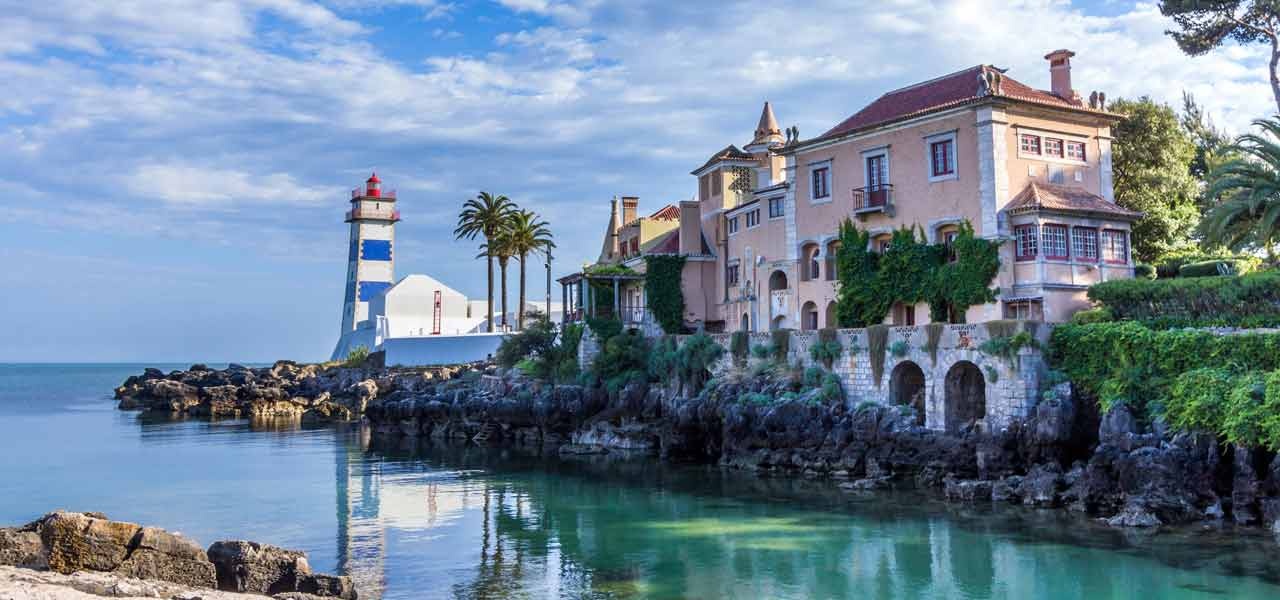
- Santa Marta Lighthouse Museum: combining coastal defence history with scenic views.
- Casa das Histórias Paula Rego: a museum dedicated to the internationally acclaimed Portuguese artist.
- Museu do Mar Rei D. Carlos: tracing Cascais’s fishing traditions and oceanographic history.
- Vila de Cascais historic centre: tiled buildings, churches, and traditional streets.
Natural and scenic landmarks
- Parque Natural de Sintra-Cascais: protected forests, cliffs, dunes, and biodiversity.
- Boca do Inferno: a dramatic rock formation shaped by wave erosion.
- Cabo Raso: a rugged coastal viewpoint with open Atlantic exposure.
Beaches and coastline – where sea and land meet
Cascais offers a coastal corridor that shifts in character from sheltered bays to powerful Atlantic shores.
Urban beaches
Close to the centre, the beaches are calm, accessible, and ideal for families:
- Praia da Rainha
- Praia da Conceição
- Praia da Duquesa
Guincho and the open Atlantic
Praia do Guincho is one of Portugal’s most iconic beaches, known for strong winds and world-class conditions for:
- Surfing
- Windsurfing
- Kitesurfing
Its setting includes the Cresmina Dunes, a protected ecosystem with boardwalks, interpretation centres, and unique flora adapted to shifting sands.
Scenic coastal walking paths
The seaside promenade linking Cascais to Estoril is one of the region’s most popular routes. Farther west, trails lead to cliffs, lighthouses, and natural viewpoints within the Sintra-Cascais Natural Park.
What shapes Cascais’s modern lifestyle?
Cascais today blends tourism, leisure, culture, and high living standards.
Economic and cultural profile
Tourism and services form the backbone of Cascais’s economy. The municipality hosts cultural festivals, exhibitions, sailing competitions, and sports events throughout the year.
Property, safety, and infrastructure
Cascais is known for:
- High property values
- Excellent public services
- A strong safety index
- Quality schools and international education options
Nova SBE, one of Portugal’s top universities, lies nearby in Carcavelos.
How is Cascais connected to Lisbon and Sintra?
Cascais is accessible by multiple transport modes, making it easy for both commuters and travellers.
Public transport options
- Train: The coastal railway connects Cascais to Lisbon’s Cais do Sodré in about 35 minutes.
- Buses: Regional buses link Cascais to Sintra and neighbouring towns.
- Road access: Highways A5 and A16 provide quick access to Lisbon and Sintra.
Private tours and curated experiences
For travellers seeking a deeper cultural perspective, guided tours can link Cascais with Sintra’s palaces, Cabo da Roca, or the coast. Wondervan.pt includes Cascais in full-day routes that explore the natural park, beaches, and maritime heritage through local storytelling.
Visiting Cascais – what to expect
Best activities for visitors
Cascais offers experiences across nature, culture, and leisure:
- Exploring historic streets and museums
- Walking along the coastal promenade
- Visiting Guincho and the Cresmina Dunes
- Enjoying seafood restaurants overlooking the Atlantic
- Sailing or cycling along the oceanfront
When is the best time to visit?
Spring and early autumn offer ideal temperatures and calmer crowds. Summer is lively, with beaches full and long evenings by the sea. Winter reveals Cascais’s quieter, more atmospheric side.
Why does Cascais matter today?
Cascais represents a blend of heritage, community, and oceanfront living. Its historic layers, protected landscapes, cultural institutions, and maritime character make it a distinctive component of Portugal’s identity. With accessible transport, safe environments, and preserved coastlines, it remains one of the country’s most appealing places to live and visit.
FAQs about Cascais
Is Cascais part of Greater Lisbon?
Yes. It belongs to the Lisbon Metropolitan Area and is closely connected by train and highway.
Can you swim at the beaches?
Yes. Urban beaches are calm, while Guincho is more suited to water sports due to wind and waves.
Are there cultural attractions besides beaches?
Cascais offers museums, historic fortresses, and art galleries throughout the town.
Is Cascais easy to combine with Sintra?
Yes. The towns are about 20 minutes apart by road, making it easy to visit both in one day.