
AZENHAS DO MAR – THE CLIFFSIDE VILLAGE BETWEEN LAND AND SEA
Azenhas do Mar – The Cliffside Village Between Land and Sea
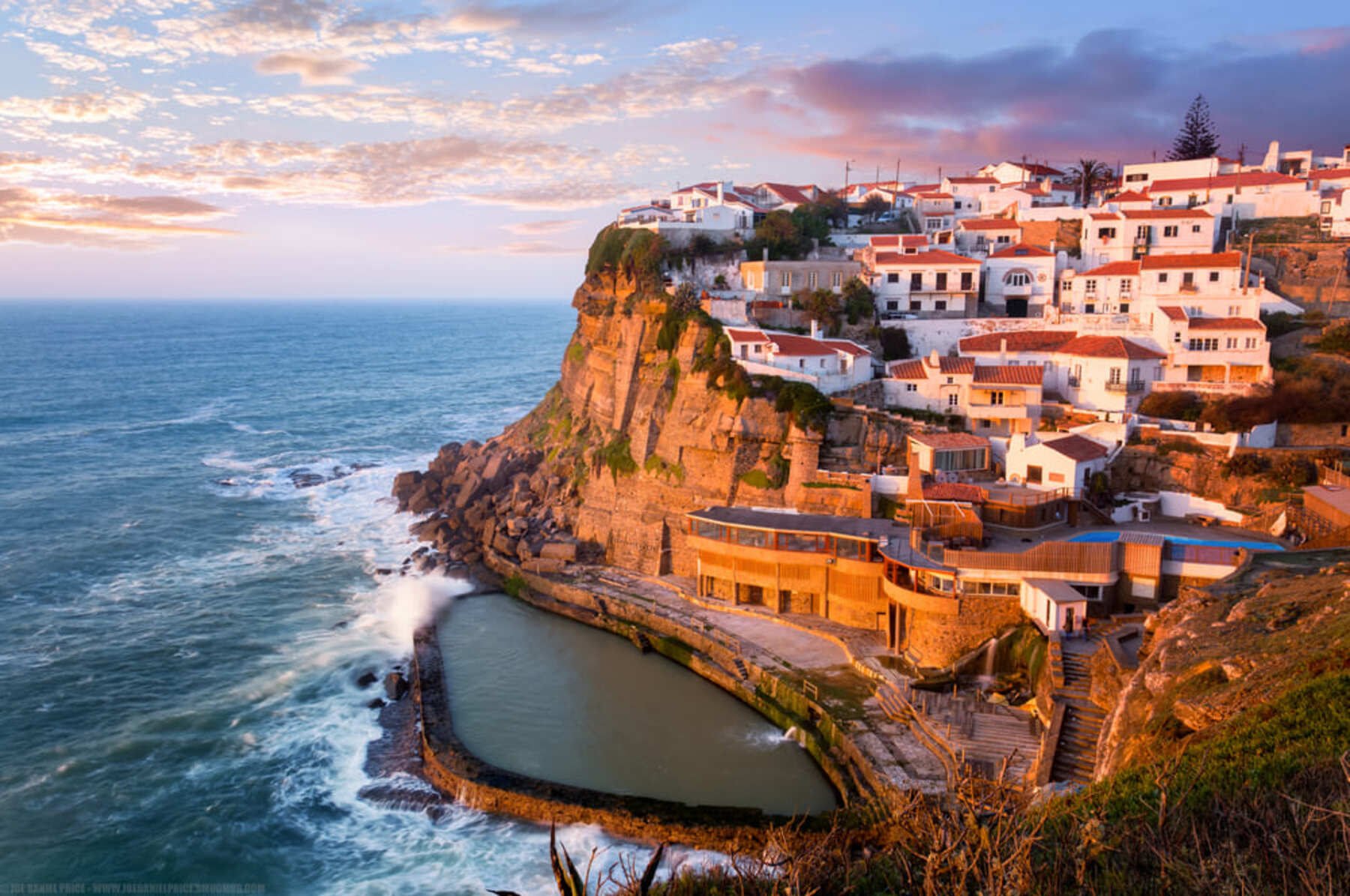
Perched dramatically on the cliffs of Portugal’s Atlantic coast, Azenhas do Mar is one of Sintra’s most iconic seaside villages. Its whitewashed houses cascade down a limestone bluff into a natural ocean pool, creating a postcard image that blends human craft with the raw power of nature.
Where is Azenhas do Mar and how did it get its name
Azenhas do Mar lies within the municipality of Sintra, in the parish of Colares, about 12 km from Sintra’s historic center. The name combines “azenha” meaning watermill with “do Mar” (“of the sea”), a reference to the mills once powered by the Ribeira de Colares before it reached the Atlantic.
How does geography shape its character
Built on terraces carved into limestone cliffs, Azenhas do Mar overlooks a small Atlantic cove, part of the Sintra-Cascais Natural Park. Its microclimate—humid, breezy, and mild—reflects constant dialogue between land and sea.
How does the landscape define Azenhas do Mar
The houses seem to descend the rock face in a white and red cascade. The terraced pattern mirrors the shape of the cliff, fusing natural slope and human settlement.
Geological and environmental setting
The coast here reveals layers of sedimentary limestone eroded by wind and saltwater. The Ribeira de Colares cuts through this terrain, forming a ravine that divides the village and nourishes local vegetation.
The balance between erosion and permanence
While waves constantly erode the base of the cliff, traditional building materials—stone and lime—help stabilize the upper terraces, maintaining the village’s structure through centuries.
What are the most remarkable features of Azenhas do Mar
The ocean pool
Carved into the rock and fed by tides, the natural ocean pool is the village’s symbol. It merges human engineering and natural rhythm, filling with seawater at high tide and becoming a calm lagoon by sunset.
Traditional architecture
White façades, red-tiled roofs, and blue azulejos define Azenhas’ visual identity. The narrow lanes between houses open into small terraces overlooking the Atlantic, where flower pots and tiled benches express local aesthetics.
The watermills and the river valley
Remnants of old mills still trace the path of the Ribeira do Cameijo, recalling the time when the village economy depended on grain and fresh water. These ruins evoke the sound of millstones that once echoed in the ravine.
Modernist villas on the upper cliffs
During the 20th century, architects built minimalist summer homes at the top of Azenhas, combining glass façades and angular geometry with the traditional tiled landscape below.
What connects Azenhas do Mar to the Sintra-Cascais Natural Park
Azenhas do Mar stands within the park’s western coastal zone, where cliffs, dunes, and sea caves form a mosaic of ecosystems. Urban expansion is tightly controlled to preserve both the village and the surrounding biodiversity.
Nearby natural landmarks
Praia das Maçãs, Praia da Aguda, and the Magoito dunes lie just minutes away, linked by scenic trails for hikers and cyclists.
Local flora and fauna
Mediterranean scrub, dune grass, and native herbs stabilize the soil. Gulls, kestrels, and seabirds nest in the cliffs, while the ravine shelters frogs and small mammals.
How has the village evolved through time
Azenhas began as a fishing and milling settlement. Its isolated charm drew artists and writers in the early 20th century, turning it into a symbol of Atlantic romanticism.
Tourism and preservation
Today, Azenhas hosts restaurants and guesthouses but retains fewer than 500 inhabitants. Heritage restrictions protect its skyline and prevent modern construction from breaking the traditional aesthetic.
Visiting Azenhas do Mar
Best viewpoints
The upper terrace viewpoint offers one of Portugal’s most famous panoramas, with the ocean pool below and waves rolling against the cliffs.
Gastronomy
Restaurants perched above the sea serve grilled fish, octopus rice, and seafood stews. The salty breeze mixes with the aroma of garlic and olive oil, creating a sensory identity tied to the Atlantic.
How to reach Azenhas do Mar
By car: 40 minutes from Lisbon via A16 or IC19, through Colares. By bus: Scotturb 440 or 441 from Sintra. By tour: Private or small-group coastal itineraries often combine Azenhas with Cabo da Roca and Praia da Adraga. On foot: The coastal trail from Praia das Maçãs offers breathtaking sea views.
When to visit
Spring and early autumn are ideal for photography, walks, and quiet seaside meals. Summer brings vibrant energy but limited parking and crowded viewpoints.
Why does Azenhas do Mar hold such symbolic value
The Atlantic spirit
Azenhas embodies Portugal’s maritime soul—beauty, resilience, and harmony with nature. The ocean pool, the cliffs, and the white façades narrate centuries of coexistence between people and the sea.
Comparison with other coastal towns
Unlike Ericeira’s surf energy or Nazaré’s grandeur, Azenhas feels intimate, sculpted by verticality and silence rather than open beach expanse.
FAQs about Azenhas do Mar
Can you swim in the ocean pool
Yes, it’s safe and tidal, though wave conditions vary.
Is it part of Sintra
Yes, it belongs to the Colares parish within Sintra municipality.
Are there accommodations
A few boutique houses and guest lodges operate within the village, blending architecture and landscape.
Why visit in winter
Winter light and Atlantic waves reveal a more dramatic, introspective side of Azenhas—perfect for photographers and travelers seeking solitude.